
Do Rising Bond Yields Signal a Crash? (Part 2)

The following is a guest editorial courtesy of Carolane de Palmas, Markets Analyst at Retail FX and CFDs broker ActivTrades.
Higher bond yields are not, on their own, a reliable indicator of an imminent stock-market crash. The more important question is whether the rise remains orderly or begins to create stress elsewhere in the financial system.
When do rising yields become a crash signal?
The first factor to monitor is the speed of the move. A gradual increase in yields gives governments, companies and investors time to adjust their portfolios and financing decisions. A rapid jump is more problematic because it can force investors to reassess asset valuations almost simultaneously. Leveraged investors may also be required to reduce positions, creating additional selling pressure across bonds and equities.
The second signal is credit spreads. Government bond yields represent the benchmark cost of borrowing, but companies must pay an additional premium depending on their creditworthiness. If corporate spreads remain contained while government yields rise, markets may simply be adjusting to a higher risk-free rate. If investment-grade and high-yield spreads start widening sharply as well, it would suggest that investors are becoming increasingly concerned about corporate balance sheets and the economic outlook.
The third indicator is corporate earnings. Higher rates are easier for companies to absorb when revenues and profits are growing. The situation becomes considerably more difficult when higher borrowing costs coincide with falling earnings expectations. In that environment, equities can face pressure from both directions: valuation multiples decline because discount rates are higher, while the earnings used to justify those valuations are also being revised lower.
This is particularly important for highly valued growth stocks. Their sensitivity to long-term interest rates means that even relatively modest changes in bond yields can produce significant changes in valuation when expectations are already demanding.
Europe may be the market to watch most closely
For European investors, however, the bond-market risk is not limited to the effect of higher rates on equity valuations.
The more important issue may be the interaction between sovereign debt, fiscal deficits and political uncertainty.
Germany remains the principal benchmark for eurozone borrowing costs, but France deserves particular attention. A sustained increase in French yields raises the cost of refinancing an already heavily indebted government. If investors simultaneously demand a greater risk premium for holding French debt, the widening spread against German Bunds becomes a measure of deteriorating confidence rather than simply a reflection of higher European interest rates.
That distinction matters. A rise in German Bund yields caused by stronger growth or higher inflation expectations is not necessarily a sign of financial stress. A rise in French yields accompanied by a widening OAT-Bund spread can tell a different story.
For investors, this makes the French-German spread an important indicator alongside the German 10-year yield. A persistent widening would suggest that investors are becoming increasingly concerned about France’s fiscal trajectory and the political ability to implement credible consolidation measures.
The potential consequences extend beyond government bonds. Higher sovereign borrowing costs can feed into financing conditions for banks, companies and households. They can also increase pressure on governments to reduce spending or raise taxes, which may weigh on economic growth.
Europe therefore faces a particularly difficult combination: relatively modest growth, renewed inflationary pressure, elevated public debt in several major economies and limited fiscal room to respond to another economic shock.
This does not mean that Europe is heading automatically towards another sovereign debt crisis. The eurozone’s institutional framework is considerably stronger than it was during the 2010-2012 crisis, while the ECB has tools designed to prevent disorderly fragmentation of sovereign bond markets.
Nevertheless, the European bond market could become an increasingly important source of volatility if fiscal concerns continue to intensify.
How should investors interpret the US, Europe and Japan together?
Looking at the three major markets together provides a clearer picture of the current environment.
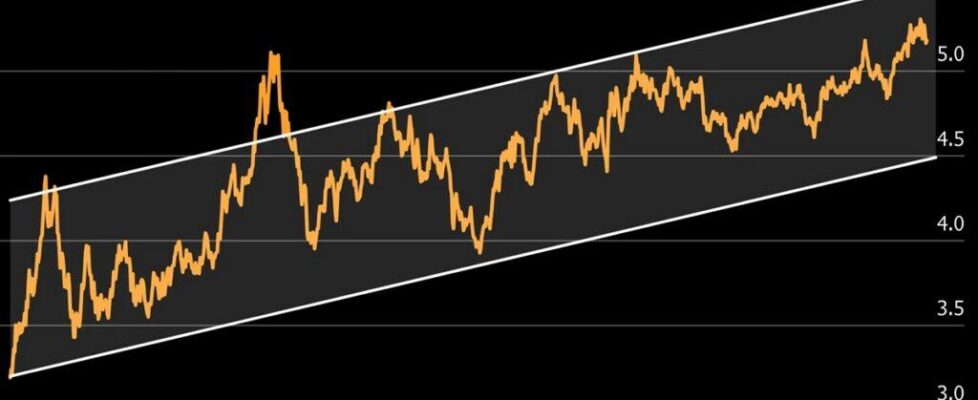
In the United States, elevated long-term yields reflect a combination of inflation uncertainty, strong investment and growth expectations, large government financing needs and the premium investors demand for holding long-duration Treasury debt.
In Europe, the issue is more fragmented. The main risk is therefore not simply higher rates but increasing divergence between sovereign borrowers within the monetary union.
In Japan, the key development is monetary normalisation. After decades of exceptionally low interest rates, higher Japanese yields could gradually change the behaviour of domestic investors and influence international capital flows.
These are different stories, but they point in the same direction: the era in which investors could assume that global interest rates would remain structurally low is becoming increasingly difficult to sustain. And that has important implications for portfolio construction.
How can investors protect their portfolios?
A higher-rate environment does not necessarily require investors to abandon equities. Instead, it makes balance-sheet quality, valuation and cash-flow visibility more important.
Companies with low debt, strong free cash flow and pricing power may be better positioned to absorb higher financing costs than highly leveraged businesses. Companies whose valuations depend heavily on distant future growth may be more vulnerable if long-term yields continue to rise.
Investors can therefore consider reducing excessive exposure to the most rate-sensitive parts of the equity market while maintaining exposure to companies with resilient earnings and robust balance sheets.
Diversification across sectors can also become more important. Financial stocks may benefit from higher rates in certain circumstances, although the effect depends on the strength of their financials. Utilities, infrastructure and selected value-oriented companies can also offer different sources of returns from long-duration growth stocks.
For bond investors, the situation is more nuanced than it was during the ultra-low-rate period. Higher yields mean that government and high-quality corporate bonds can once again provide meaningful income. Investors with a long enough investment horizon may also benefit from capital appreciation if inflation eventually falls and long-term yields decline.
The key is to distinguish between yield income today and interest-rate risk tomorrow. Longer-duration bonds offer greater potential gains if yields fall, but they can also experience significant price declines if yields continue to rise.
What could turn a correction into a crash?
The most dangerous scenario would be a combination of several negative developments rather than one isolated market move.
A sharp rise in bond yields could initially trigger a valuation correction. If economic growth then weakens, corporate earnings expectations could decline. If credit spreads simultaneously widen, companies could face significantly higher refinancing costs. And if liquidity deteriorates, leveraged investors may be forced to sell assets, amplifying the initial decline.
This is the mechanism investors should watch for rather than focusing on a particular threshold for the US 10-year Treasury or any other government bond.
Bottom line: rising yields are a warning, not a crash signal
The global bond-market sell-off is changing the investment landscape. The US is dealing with large financing requirements and elevated long-term yields, Japan is normalising monetary policy after decades of exceptionally low rates, while Europe faces the additional challenge of fiscal divergence between member states.
For investors, the important question is therefore not whether yields are “too high”. Markets can adapt to higher rates when economic growth and corporate earnings remain sufficiently strong. The greater danger is a disorderly rise in yields that begins to undermine the economy and financial system.
A combination of rapidly rising government bond yields, widening credit spreads, falling earnings expectations, weaker economic data and deteriorating liquidity would be considerably more worrying than any single rate level.
For now, higher yields should therefore be viewed primarily as a risk-management signal. They encourage investors to reassess valuations, debt exposure, portfolio duration and sector allocation rather than automatically prepare for a crash.
The bond market may be signalling that the cost of capital has entered a structurally different phase. Whether that produces a normalisation of asset valuations or develops into a much larger market correction will depend on what happens next to inflation, growth, corporate profits and government finances.
Sources: Reuters, Yahoo Finance, The Wall Street Journal, CNBC, Investopedia, TradingEconomics
The information provided does not constitute investment research. The material has not been prepared in accordance with the legal requirements designed to promote the independence of investment research and as such is to be considered to be a marketing communication.
All information has been prepared by ActivTrades (“AT”). The information does not contain a record of AT’s prices, or an offer of or solicitation for a transaction in any financial instrument. No representation or warranty is given as to the accuracy or completeness of this information.
Any material provided does not have regard to the specific investment objective and financial situation of any person who may receive it. Past performance is not a reliable indicator of future performance. AT provides an execution-only service. Consequently, any person acting on the information provided does so at their own risk. Forecasts are not guarantees. Rates may change. Political risk is unpredictable. Central bank actions may vary. Platforms’ tools do not guarantee success.