
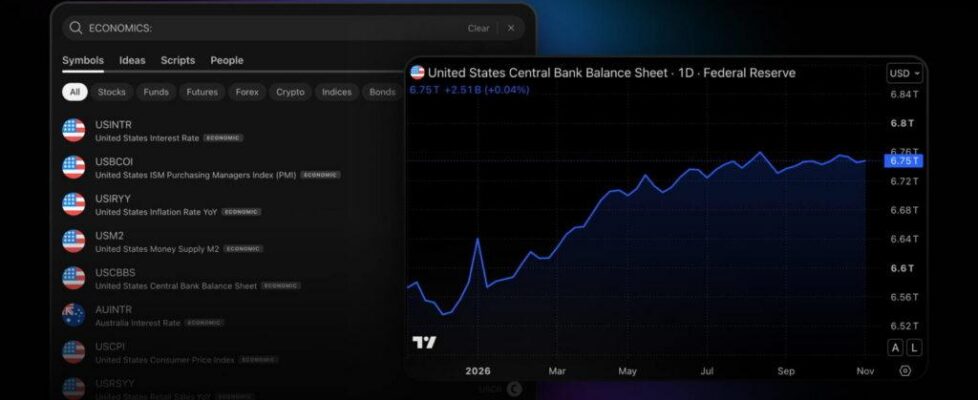
TradingView enables its users to access economic data directly from primary source

TradingView has switched to an economic data feed it built in-house.
Now, TradingView gets the data directly from the institutions that publish it, including central banks, national statistical offices, the World Bank, and the IMF.
The switch was built to be invisible: same tickers, same names, same history. Economic data is not going anywhere. It now runs on infrastructure TradingView owns, and that is exactly what lets TradingView grow coverage on its own schedule.
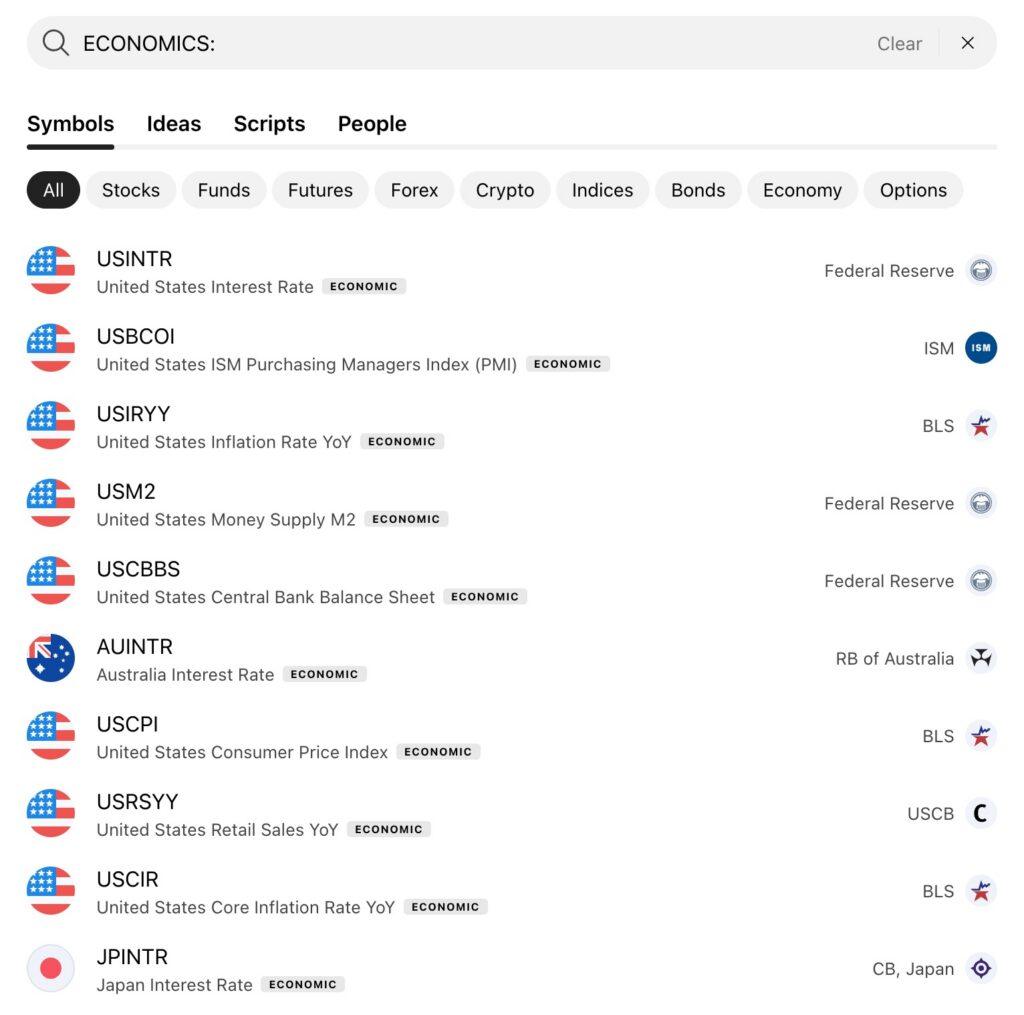
Every major macro series you’d expect to find is live, under the same ticker it always had:
- Interest rates — US, Euro Area, Japan, UK, Canada, Australia, and the rest of the major central banks
- Inflation — CPI, core CPI, inflation rate YoY, and MoM across major economies
- Growth — GDP, real GDP, GDP growth rates
- Jobs — unemployment rate, nonfarm payrolls, initial jobless claims, wage growth
- Money and activity — M2, central bank balance sheets, ISM PMI, retail sales, housing data
Your saved charts and watchlists on these symbols will keep working. You don’t need to do anything.
The Economic calendar works exactly as before, now on a source with stronger coverage of actual values: more releases land with real numbers.
Macro Maps, the World Economy section, and country pages are all running on the new data too.