

Lime’s IPO Opens a New Trading Opportunity on ActivTrader

The following is a guest editorial courtesy of Carolane de Palmas, Markets Analyst at Retail FX and CFDs broker ActivTrades.
Founded in 2017 and headquartered in San Francisco, Lime has become the world’s largest shared micromobility operator, offering electric scooters and e-bikes for short-distance urban transport. The company now operates across more than 230 cities in nearly 30 countries, providing millions of riders with an alternative to traditional public transport and private vehicles.
Lime’s business model is built around the growing demand for affordable, flexible and environmentally friendly transportation. As cities tackle traffic and promote eco-friendly transit, shared micro-mobility like electric bikes and scooters has grown from a niche trend into an integral part of urban transport networks.
Unlike traditional vehicle rental businesses, Lime focuses on short journeys that connect commuters to public transport hubs or replace trips that would otherwise be made by car. Its mobile application allows users to locate, unlock and pay for vehicles within seconds, making the service particularly attractive in densely populated metropolitan areas.
Today, Lime has established itself as one of the few global players to survive the difficult consolidation that reshaped the micromobility industry over recent years.
Why Lime Waited Years Before Going Public
Following a $523 million funding round in 2021, Chief Executive Officer Wayne Ting indicated that the company was targeting a public listing in 2022. Those plans were later postponed as higher interest rates, weaker equity markets and declining investor appetite for growth companies made conditions less favourable.
Management repeatedly stressed that timing alone was not the deciding factor. Ting argued that Lime wanted to demonstrate it had built a fundamentally stronger and more resilient business than many of the first-generation micromobility companies that struggled after listing.
Over the past three years, revenue demonstrated steady growth, climbing from $521 million in 2023 to nearly $887 million in 2025. Concurrently, operational efficiency improved, allowing net losses to shrink significantly from $122.3 million to $59.3 million over the same period, despite ongoing capital investments in technology and fleet expansion.
The company’s growth has largely been driven by increasing vehicle density in existing cities rather than simply expanding into new markets. By deploying more scooters and e-bikes within established operating areas, Lime improves vehicle availability, reduces waiting times and increases rider engagement. According to Wayne Ting, stronger network density creates a more reliable service, which in turn encourages higher customer adoption and usage.
Alongside organic expansion, Lime has also strengthened its international footprint and now operates in 230 cities across around 30 countries. Its strategic partnership with Uber remains an important competitive advantage, allowing users in many cities to book Lime vehicles directly through Uber’s application. However, Uber’s approximately 24% ownership stake and contribution of more than 14% of Lime’s revenue last year also illustrate the company’s continued dependence on its largest strategic partner.
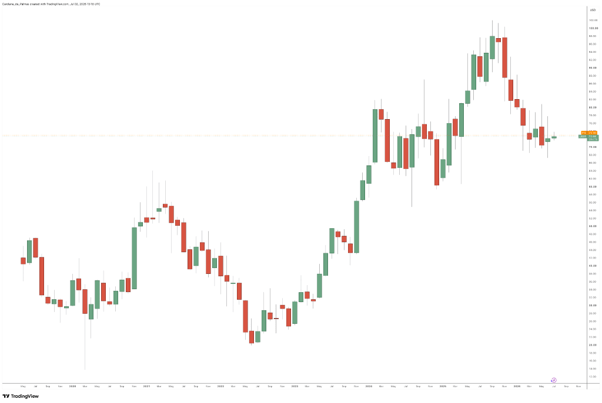
Monthly Uber Chart – Source: TradingView
Despite its improving financial performance, Lime still required fresh capital. In its IPO prospectus, the company disclosed “substantial doubt” about its ability to continue without additional financing, citing approximately $1 billion of liabilities, a significant portion of which is expected to mature over the near term. The proceeds from the public offering therefore provide greater financial flexibility while strengthening the balance sheet and supporting future expansion.
The listing could also mark an important milestone for the broader micromobility sector. Several early competitors failed to achieve sustainable profitability after entering public markets. Bird ultimately filed for bankruptcy protection, while other operators either merged, exited public exchanges or ceased operations altogether. Lime’s successful IPO could therefore represent a sign that investors are once again willing to back companies that have demonstrated improving fundamentals and scalable business models.
Lime Joins a Reopening US IPO Market
Lime’s market debut comes as the US IPO market shows renewed momentum following a period of heightened volatility earlier in the year. Equity markets have remained resilient despite geopolitical uncertainty, encouraging several companies that had delayed their listing plans to return to public markets.
Investor sentiment has also improved following a series of high-profile IPOs that have attracted significant attention throughout 2026. Among them, SpaceX’s record-breaking public debut helped reignite interest in growth companies, even though its shares experienced elevated volatility in the weeks following the listing.
That performance has reinforced a familiar pattern for newly listed companies: strong investor demand often translates into sharp price swings as the market searches for a fair valuation. Lime priced its IPO at $25 per share before the stock quickly traded above its offer price during its first session, highlighting robust investor demand for one of the world’s largest pure-play micromobility companies.
For traders, newly listed companies often present some of the highest levels of volatility seen in equity markets. Limited trading history, evolving analyst coverage and rapidly changing investor expectations can all contribute to significant price movements during the first weeks or months after listing.
Trading Lime Shares with CFDs on ActivTrader
As Lime begins trading on the public markets, ActivTrades is making the stock available through Contracts for Difference (CFDs) on its ActivTrader platform.
CFDs allow traders to trade both rising and falling share prices without taking ownership of the underlying stock, providing flexibility during periods of heightened market volatility that often accompany newly listed companies. However, leverage amplifies both potential gains and potential losses, making risk management particularly important when trading IPOs, as newly listed stocks can experience sharp intraday swings.
Nedko Geshev, Chief Communications Officer at ActivTrades, commented:
“Lime enters the public market at a particularly interesting moment. The company has demonstrated stronger operational discipline than many early micromobility peers, but like most IPOs, its valuation will continue to evolve as new information reaches the market. We expect high volatility during the first weeks of trading, creating opportunities for traders with a clear risk management strategy.”
As with all leveraged products, CFDs carry a high level of risk and are not suitable for every investor. Traders should ensure they fully understand how leverage works and carefully consider their risk exposure before trading CFDs.
Sources: Lime, Reuters, Investopedia, TechCrunch
The information provided does not constitute investment research. The material has not been prepared in accordance with the legal requirements designed to promote the independence of investment research and as such is to be considered to be a marketing communication.
All information has been prepared by ActivTrades (“AT”). The information does not contain a record of AT’s prices, or an offer of or solicitation for a transaction in any financial instrument. No representation or warranty is given as to the accuracy or completeness of this information.
Any material provided does not have regard to the specific investment objective and financial situation of any person who may receive it. Past performance is not a reliable indicator of future performance. AT provides an execution-only service. Consequently, any person acting on the information provided does so at their own risk. Forecasts are not guarantees. Rates may change. Political risk is unpredictable. Central bank actions may vary. Platforms’ tools do not guarantee success.