
IG becomes major player in Prediction Markets buying Underdog for $1.3 billion

Leading UK based online broker IG Group (LON:IGG) has taken a big step to establish itself as a major player in the expanding Prediction Markets business, announcing that it has agreed to acquire Underdog Sports Holdings Inc, a leading US daily fantasy sports and prediction markets operator, for total consideration of up to approximately $1.3 billion.
The purchase price comprises upfront consideration based on an enterprise value of approximately $1.1 billion (to be settled partly by the issuance of IG ordinary shares) and an earnout of approximately $200 million payable to Underdog’s shareholders. Separately, and in addition to this consideration, eligible Underdog employees will participate in a management incentive plan (MIP) with a maximum potential payout of $850 million, self-funded from Underdog’s earnings and conditional on strong outperformance. The maximum total MIP would require Underdog to deliver EBITDA of at least $400 million in 2028 and $700 million in 2029.
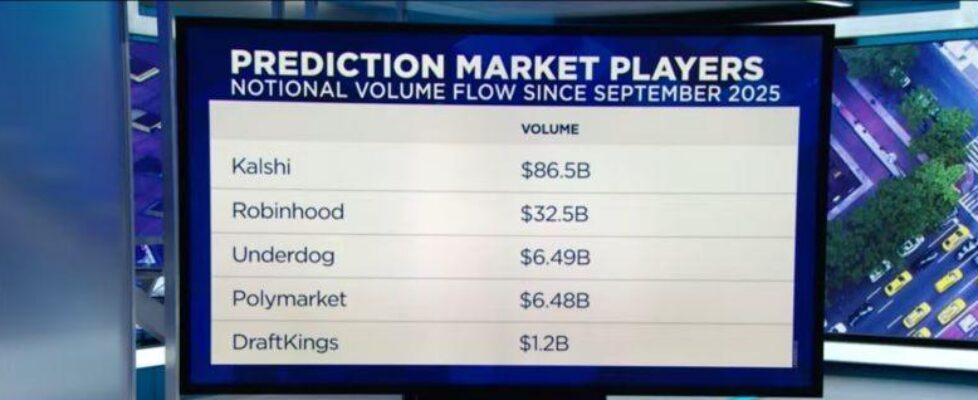
Since launching prediction markets in September 2025, Underdog has become the third-largest US prediction markets venue by US regulated notional volume flow, across both prediction markets and daily fantasy sports (DFS) combination trades behind Kalshi and Robinhood. Prediction markets are among the fastest-growing trading and entertainment markets, with volume to date dominated by sport – where Underdog’s brand equity gives it an advantaged position to consider expanding into crypto, financial, macroeconomic, cultural and political outcomes, opening a materially larger addressable market.
The Acquisition is a key outcome of IG Group’s strategic review announced on 19 March 2026 and marks a decisive step in IG’s long-term strategy to build a global consumer engagement platform that capitalises on the rapid convergence of trading, investing and entertainment. Together with IG’s proposed redomicile and refreshed organisational model, announced on 8 July 2026, it substantially concludes that review. IG has today also published its H1 2026 results in a separate announcement and will set out further detail on its refreshed strategy, capital allocation framework and guidance at a Strategy Update on 22 October 2026.
The Acquisition is expected to be broadly neutral to adjusted EPS in year one, double-digit per cent accretive by year three, and to deliver a return on invested capital in excess of IG’s weighted average cost of capital in year three, in line with IG’s capital allocation framework.
Strategic highlights
The IG Board believes the Acquisition will:
- more than double IG’s US revenues and increase US monthly active customers more than tenfold, adding a fast-growing, low-cost customer-acquisition channel whose revenues are uncorrelated with IG’s;
- create a coherent customer funnel across the enlarged Group – from sports and prediction markets into active trading and derivatives on financial markets – scaled through tastytrade in the US and IG’s platform internationally, deepening multi-product relationships, lifting lifetime value and extending retention;
- add an exceptional, founder-led and product-first team to accelerate innovation across IG;
- establish IG as a leader in US prediction markets – a large, rapidly expanding category regulated federally by the US Commodity Futures Trading Commission (the “CFTC”) – adding a leading franchise with strong brand equity, differentiated product and an engaged, mobile-first base of approximately one million average monthly active users and over five million depositing customers, drawn from more than 11 million registered accounts;
- extend that opportunity beyond sport: the Board believes leadership in sport provides a strong platform to consider moving into non-sports contracts, with the same regulated infrastructure able to support contracts referencing crypto, financial and macroeconomic, and cultural and political outcomes, opening a materially larger addressable market; and
- secure a valuable, vertically integrated licence stack – a futures commission merchant (brokerage), designated contract market (exchange) and derivatives clearing organisation (clearing house) (together “FCM / DCM / DCO”). Spanning the full trade lifecycle, it allows IG to internalise the economics across the value chain, complements the Group’s existing licences and positions IG as a leading early mover in prediction markets, while providing optionality to enter the rapidly developing perpetual futures market.
Underdog will operate as a commercially standalone business, with its own brand, management team and operational platform to support delivery of the strategy. The Board will continue to evaluate the Group’s optimal listing structure over time as the business grows.
Financial highlights
Key terms
- Maximum total consideration comprises: (i) upfront consideration based on an enterprise value of approximately $1.1 billion, subject to customary adjustments – equivalent to 2.4x Underdog’s LTM June 2026 net revenue; and (ii) an earnout of up to approximately $200 million payable to Underdog’s shareholders subject to 2026 net gaming revenue targets and conditional on achievement of positive 2026 EBITDA for Underdog.
- The upfront equity value payable on completion of the transaction is expected to be approximately $963 million. IG will settle this by: (i) issuing approximately 24.1 million new IG ordinary shares (representing approximately 6.8% of IG’s enlarged issued share capital on completion and 60.0% of the upfront equity value); and (ii) a payment in cash of approximately $380 million, subject to adjustments based on cash, debt and working capital. In addition, IG will repay Underdog’s existing debt at completion, expected to be approximately $160 million.
- The Earnout is expected to be paid in cash in early 2027, in line with the performance conditions set out above.
- Separately, and in addition to the consideration payable to selling shareholders, eligible Underdog employees will participate in a management incentive plan (the “MIP”). The MIP does not form part of the consideration payable to the selling shareholders. The MIP is capped at $850 million, with the maximum total payment requiring Underdog to deliver EBITDA of at least $400 million in 2028 and $700 million in 2029. Other than the portions to be settled in shares, as set out below, the MIP is expected to be paid in cash and self-funded from Underdog’s earnings, although IG retains the flexibility to settle it (in whole or in part) in new IG ordinary shares at its sole discretion.
- The Founders will have 50% of any 2029 MIP payout settled in IG shares rather than cash, delivered over a deferred period of approximately two years with the number of shares fixed by reference to the 30-trading-day volume-weighted average price of IG shares ending on the date that the applicable MIP payouts are determined.
Underdog financial profile
- Net revenue of approximately $466 million in the 12 months ended 30 June 2026, up 21% on the equivalent prior year period (12 months ended 30 June 2025: $380 million).
- Net revenue of approximately $122 million and EBITDA of approximately $46 million in the three months to 30 June 2026.
- Revenue streams largely uncorrelated with IG’s existing business, providing diversification alongside strong growth.
Leverage and solvency
- Pro forma gross leverage of under 2.0x at end-2026, deleveraging thereafter, with IG remaining committed to retaining an investment grade credit rating.
- Pro forma solvency ratio within IG’s 160-200% target range at end-2026.
- Share buybacks paused with effect from the date of IG’s half-year results, published today, with IG expecting to be positioned to resume them in 2027 subject to the completion of the Group’s redomicile, share price performance and other demands on capital.
Guidance and outlook
The Acquisition is expected to accelerate IG’s standalone revenue, EBITDA and adjusted earnings per share growth over the medium term, and to broaden the Group’s addressable market through Underdog’s fast-growing, uncorrelated revenues.
- IG’s standalone guidance is unchanged: at least 10% organic total revenue CAGR over the medium term, from the 2025 standalone base of approximately £1,100 million. The Acquisition is expected to raise the combined Group’s revenue growth rate above this level, driven by a stronger double-digit revenue CAGR from Underdog post-completion.
- Acquisition is expected to be broadly neutral to adjusted EPS in year one, double-digit per cent accretive by year three, and to deliver a return on invested capital in excess of IG’s weighted average cost of capital in year three, in line with IG’s capital allocation framework.
- No change to dividend policy – the Group remains committed to a progressive ordinary dividend per share.
 Commenting on the Acquisition, Breon Corcoran, Chief Executive Officer of IG Group, said,
“Technology is reshaping the large, high-engagement markets in which IG operates – and increasingly bringing them together. Underdog puts us at the front of that convergence: a product-first team, a leading daily fantasy sports franchise and a full licence stack that together give us a differentiated position in US prediction markets. It expands both our addressable market and our growth trajectory. We are delighted to welcome Jeremy and the Underdog team to IG.”
 Commenting on the Acquisition, Jeremy Levine, Co-Founder and Chief Executive Officer of Underdog, said,
“We built Underdog by creating the best experience for fans, and we’ve proven we can build the best products no matter how the regulatory landscape shifts. It’s why we’ve taken off in prediction markets since we launched last year. Now, with our own exchange and by joining IG, we’re going to take an incredible leap in what we can offer customers and make Underdog the place to make predictions on sports and beyond. IG’s scale, expertise, resources and reach are going to unlock our potential, expand what we’ve built, and bring our products to more audiences. I couldn’t be more excited about what we’re going to do together.”
Underdog: a leading sports franchise unlocking the prediction-markets opportunity
Founded in 2020, Underdog has become one of the largest daily fantasy sports (“DFS”) operators in the US. DFS is a large US consumer category in which players pay an entry fee to compete in skill-based contests on the performance of real professional athletes. Underdog operates in both principal formats: draft contests, in which customers draft a line-up of athletes within a fixed budget and the highest aggregate score wins; and pick’em contests, in which customers predict whether individual athletes will finish above or below projected statistical thresholds, with a correct set of selections earning a fixed payout.
For example, a customer might select LeBron James to score more than 27.5 points in an NBA game and Patrick Mahomes to pass for more than 275.5 yards in an NFL game, combining both into a single entry. Unlike season-long fantasy sports, DFS contests typically settle over a single day or weekend of games, and the format has long been treated in the US as a game of skill – a status that pre-dates, and is distinct from, state-regulated sports betting.
DFS has been the engine of Underdog’s growth. It is the second-largest DFS operator by revenue, behind PrizePicks, and one of the fastest-growing. Over approximately five years it has built a large, sports-native base of more than five million depositing customers and over 11 million registered accounts: a mobile-first community, comfortable with fast, short-duration, skill-adjacent risk-taking and acquired efficiently through a differentiated, product-first proposition and a strong brand.
The reach of that franchise is, however, constrained by its regulatory basis. As a game-of-skill product, DFS is regulated state-by-state where the permitted contest formats confine the product to a fraction of the risk-taking its customers seek – pick’em contests, for example, must reference multiple athletes across multiple teams and cannot offer a position on a single outcome. These limitations cap both Underdog’s addressable market and breadth of product.
Prediction markets remove those constraints. They allow customers to take simple, intuitive positions on the outcome of future events through exchange-traded event contracts regulated federally by the CFTC, unlocking national coverage in place of state-by-state gaming regimes. The category has expanded rapidly, supported by growing institutional participation, and has a long runway as adoption broadens. With more than 50 million US sports bettors and DFS players already comfortable with this style of risk-taking, sport is both the largest category in prediction markets today and a large, pre-converted pool from which Underdog can capture customers.
Underdog has moved decisively to capture this opportunity, assembling the valuable, fully vertically integrated FCM / DCM / DCO licence stack and market infrastructure needed to operate prediction markets in its own right. Alongside Kalshi and Robinhood, Underdog is one of only a few operators today with the integrated capability to compete meaningfully in sports prediction markets. That stack enables a complete sports experience – federally regulated event contracts, single-outcome positions, parlay-style combinations, a patented format that combines DFS and prediction-market mechanics within a single position, and other creative product not previously open to Underdog. This framework is deliverable in around 50 states under a single federal regime, in place of the fragmented, state-by-state DFS framework.
Underdog is well placed to win as this market develops. It has migrated its pre-converted customer base onto prediction-market rails with no friction – the same app, wallet, identity verification and brand – so the principal cost of entry has largely already been met. That advantage is showing in performance. Since launching a limited offering in September 2025, with contracts listed on a third-party exchange, Underdog has expanded across 30 states with parlays and migrated to Kalshi – and is now the third-largest US prediction-markets venue by US-regulated notional volume flow, across both prediction markets and DFS combination trades. The product reached 54% of Handle in the first half of 2026, and quarterly Group EBITDA rose to $46m in Q2 2026.
The next phase of growth will be unlocked by Underdog’s proprietary exchange launched in July 2026, giving it full control over product development and enabling it to internalise the economics across the value chain.
Underdog’s opportunity extends well beyond sport. The Board believes that leadership in sport provides a strong platform from which to consider moving into non-sports contracts, with the same regulated infrastructure able to support contracts referencing crypto, financial and macroeconomic, and cultural and political outcomes, opening a materially larger addressable market. That same exchange and clearing infrastructure also positions Underdog for the emerging onshore market in perpetual futures, and to share infrastructure with tastytrade, giving the enlarged Group a further long-term avenue for growth.
Background to and reasons for the Acquisition
IG Group strategy and the strategic review
On 19 March 2026, IG announced a strategic review to position the Group for its next phase of growth. As part of that review, IG explored complementary and adjacent sectors capable of transforming the Group’s growth potential and concluded that prediction markets represent a compelling new market for IG to enter – a large, high-growth market that aligns with IG’s strengths in regulated markets, risk management and technology, broadens its appeal to a younger demographic. Following an extensive evaluation, the Board identified Underdog as the most compelling means of establishing IG with a leading position in this new market. The Acquisition combines Underdog’s engineering talent, product-first innovation, engaged customer base and leading position in US prediction markets with IG’s global scale, compliance capability, regulatory infrastructure and complementary customer base.
A founder-led, product-first franchise
Underdog is led by its co-founder and Chief Executive Officer, Jeremy Levine, who previously founded DRAFT (acquired by Paddy Power Betfair, now Flutter) and StarStreet (acquired by DraftKings), and co-founder and Chief Product Officer Brandon Stakenborg, supported by an experienced leadership team drawn from across technology, payments and gaming. IG and Underdog share an unrelenting focus on customers, product and innovation, and a high-performance culture that has driven rapid product velocity. IG Group CEO Breon Corcoran, who was CEO of Paddy Power Betfair when it acquired DRAFT, was an early-stage investor in Underdog, and has built a close relationship with its senior leadership over several years.
Enhanced US scale and customer funnel
The Acquisition materially increases IG’s US presence: on completion it is expected to more than double the Group’s US revenues and to increase US monthly active customers more than tenfold, bringing a large, engaged customer base together with an efficient, low-cost acquisition channel. On a pro forma basis – combining Underdog’s audited 2025 results with IG’s audited 2025 results – the US would have represented approximately 40% of Group revenue, up from 22% on a standalone basis, with prediction markets and DFS accounting for approximately 25% of combined total net trading revenue, reducing the Group’s reliance on any single product line. The Board sees significant opportunity in the resulting funnel, with growing scope for multi-product relationships spanning sports and prediction markets alongside active trading and investing. The acquisition presents two-way cross-selling potential: more than 58% of Underdog’s customers have traded individual stocks and 46% have traded crypto, while in the wider market, 44% of options and futures traders participate in sports prediction markets and 63% in online sports betting.
Operating model and integration
Following completion, Underdog would operate as a standalone brand, with separate platforms, propositions and leadership teams, and Underdog’s CEO would report directly to IG Group’s CEO. Synergies are expected to include capital efficiency from a shared balance sheet, complemented by revenue synergies from multi-product relationships across complementary customer bases and from shared product engineering, marketing capabilities and regulatory licences.
Attractive financial profile and returns
Underdog has grown rapidly, turning EBITDA-profitable in Q1 2026 and delivering $46m of EBITDA in Q2 2026, and is expected to keep growing strongly. IG is paying in two parts – an upfront amount and an earnout. A separate MIP rewards management for performance, so that a meaningful share of IG’s total payment is contingent on Underdog’s future performance. Underdog will operate as a commercially standalone business following completion, reducing execution risk.
Key terms of the Acquisition
Consideration structure
The maximum total consideration payable to Underdog’s shareholders comprises: (i) upfront consideration based on an enterprise value of approximately $1.1 billion on completion, subject to customary adjustments for cash, debt and debt-like items and for a normalised level of working capital, equivalent to an upfront equity value of approximately $963 million, and (ii) a further Earnout of up to approximately $200 million determined by reference to Underdog’s 2026 net gaming revenue3 and contingent on positive 2026 EBITDA, payable on a straight-line basis between net gaming revenue of $533 million and $600 million.
The consideration structure, and its weighting towards equity as the form of consideration, reflects IG’s current regulatory capital framework, which applies ahead of the proposed establishment of a Jersey-incorporated holding company. It is designed to keep appropriate headroom above the Group’s consolidated capital requirements while retaining and incentivising Underdog’s key people.
Management Incentive Plan
Separately, a MIP will be established for eligible Underdog employees which does not form part of the consideration payable to the selling shareholders. The structure is geared to value creation meaningful payouts accrue only where Underdog delivers substantial EBITDA growth, aligning management’s reward with the earnings from which the plan is funded.
The 2028 component of the MIP accrues on a straight-line basis by reference to 2028 EBITDA of between $140 million and $400 million, capped at $350 million. The 2029 component accrues by reference to 2029 EBITDA across three tiers: $1.45 per $1 of EBITDA between $278 million and $416 million (c.$200 million of MIP); $0.54 per $1 between $416 million and $600 million (c.$100 million of MIP); and $2.00 per $1 between $600 million and $700 million (c.$200 million of MIP).
Other than the portions to be settled in shares as set out in the “Financial Highlights” section, the MIP is expected to be paid in cash and self-funded from Underdog’s earnings, although IG retains the flexibility to settle it (in whole or in part) in new IG ordinary shares at its sole discretion.
Financing
IG has entered into a committed $950 million bridge facility with Barclays Bank PLC and Goldman Sachs International to fund the following:
- Payment of the cash consideration payable to Underdog shareholders, including the upfront cash payable on completion (expected to be approximately $380 million and the 2026 Earnout); and
- Refinancing of Underdog’s existing borrowings on completion of the transaction, expected to be approximately $160 million.
IG remains committed to maintaining an investment grade credit rating. On a pro forma basis, gross leverage is expected to be under 2.0x at end-2026, deleveraging thereafter. To preserve IG’s capital position while leverage reduces, share buybacks will be paused with effect from the announcement of the Group’s first half results, published today. The Group expects to be positioned to resume buybacks in 2027 subject to the completion of the Group’s redomicile, share price performance and other demands on capital.
Vesting and lock-up
The new IG ordinary shares issued to Underdog shareholders pursuant to the transaction on completion will be subject to the following arrangements:
- Underdog’s founders (the “Founders”), Jeremy Levine and Brandon Stakenborg, will receive, in aggregate, IG shares constituting approximately 1.5% of IG’s enlarged share capital on completion. Those shares will be subject to contractual vesting and lock-up restrictions from completion, with lock-up restrictions released in respect of one-sixth of each Founder’s shares nine months after completion, and a further one-sixth each quarter thereafter, until fully released 24 months after completion.
- Certain institutional shareholders in Underdog will receive IG shares constituting approximately 3.0% of IG’s enlarged share capital on completion. Those shares will be subject to lock-up restrictions for a period of six months.
- The Founders and certain institutional shareholders in Underdog will also be subject to customary orderly sell-down restrictions from the point that their IG shares have vested and lock-up restrictions are released (as applicable).
- Other, smaller, shareholders in Underdog will, in aggregate, receive shares constituting approximately 3.0% of IG’s enlarged share capital on completion. Those shares will not be subject to any lock-up arrangements, although some will remain subject to vesting arrangements over time.
Conditions and approvals
Completion of the Acquisition is expected to be conditional upon, among other things:
- relevant regulatory approvals in the United States; and,
- regulatory approval or the expiration of the required waiting period under the Hart-Scott-Rodino Antitrust Improvements Act of 1976 (“HSR Act”) in the United States.
Timing and completion
The Acquisition is expected to complete in late 2026 or early 2027, subject to satisfaction of the conditions described above and to the completion of confirmatory diligence and definitive documentation.